
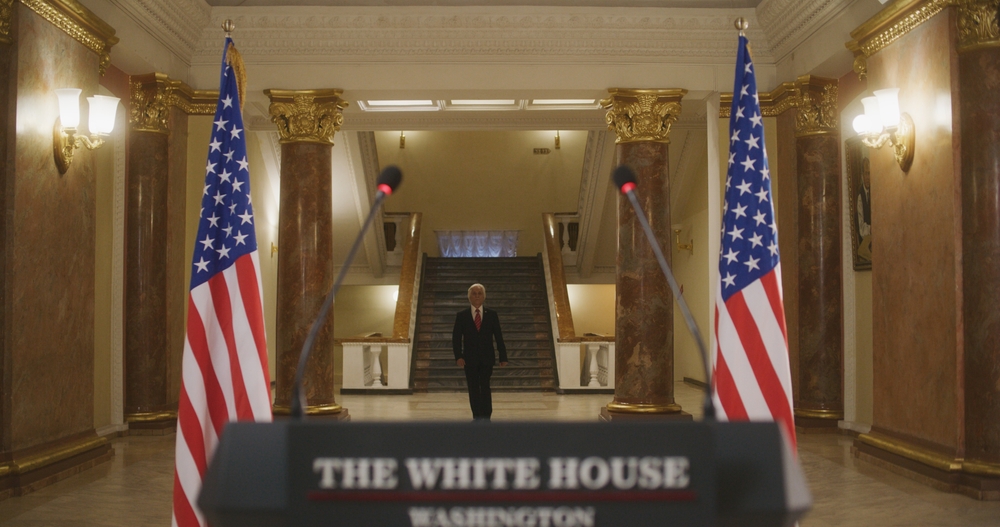
CNN got caught pushing a fake intelligence leak about Trump's Iran strike.
Trump answered by banning CNN, MS NOW, and Politico from the White House entirely.
Every other network in the pool just made a decision Trump never saw coming.
Why CNN Was Sitting in the Penalty Box in the First Place
CNN's ban did not come out of nowhere.
Press Secretary Karoline Leavitt has spent recent months publicly ripping CNN's reporting apart, piece by piece.
She torched CNN's claim that the administration skipped bipartisan courtesy calls before a military strike, calling it flat-out false and demanding a retraction.
She hammered CNN again over a leaked "top secret" intelligence assessment on the Iran response in the Strait of Hormuz, accusing the network of running with a leak from an anonymous, low-level staffer to smear the strike's success.
Trump made it official on September 19, 2026, cutting off all three outlets and branding them "fake news" with no negotiation window offered.
He insisted he was not attacking a free press.
He said he was done rewarding outlets that keep getting the story wrong.
The Pool Revolt and the Lawsuit Nobody at CNN Wanted to Need
Here is where it got interesting.
Fox News Media, ABC News, CBS News, CNN, and NBC News make up the White House television pool that rotates coverage of presidential events.
Instead of Fox, ABC, CBS, and NBC quietly stepping in to cover for CNN's suspended slot, all five networks suspended pooled coverage together, a guild reflex protecting one of their own rather than a stand on the facts of CNN's reporting.
Their joint statement leaned hard on the idea that "the public has a vital interest in receiving accurate, independent information about its government" without addressing why CNN lost its access in the first place.
CNN, MS NOW, and Politico did not stop at a statement.
They sued the administration, arguing the ban violates the First Amendment.
Legal scholar Jonathan Turley, no reflexive Trump cheerleader, laid out the precedent both sides are fighting over: a 1977 case called Sherrill v. Knight, which says White House access cannot be denied "arbitrarily or for less than compelling reasons."
Turley also noted the administration has a legitimate argument, since the briefing room is not a fully public forum and security-based restrictions have been upheld before.
That is a narrow legal opening, not a real defense of CNN's track record, and Trump's team is betting the years of documented, retracted, and walked-back CNN stories count as more than enough reason to use it.
What the White House Is Signaling With Its Next Move
The most telling moment came the same day CNN filed suit.
The White House posted an eyes emoji, a television emoji, and four words: "Something's coming. Stay tuned."
No press release, no follow-up, just a tease dropped in the middle of a legal fight over who gets to control the cameras in that room.
Read next to the Iran leak story and the courtesy-call claim CNN had to walk back, the signal is obvious.
The administration is not waiting on a judge to decide who covers the White House.
It is building a way around the legacy pool entirely, and CNN just handed them the reason to do it in public, under oath, in a lawsuit that puts CNN's sourcing on the record for a judge to read.
Sources:
- Nick Arama, "TV Networks Suspend Pool Coverage After CNN Ban, White House Teases What's Next," RedState, September 21, 2026.
- Jonathan Turley, "Fake News or Viewpoint Discrimination: Can the President Ban Disfavored Media?," JonathanTurley.org, September 20, 2026.
- Fox News, "White House Press Secretary Leavitt Rejects CNN Iran Report as Fake News," Fox News, 2026.
- CNBC, "White House TV Pool Won't Cover Trump After Press Ban: CNN," CNBC, September 21, 2026.
