
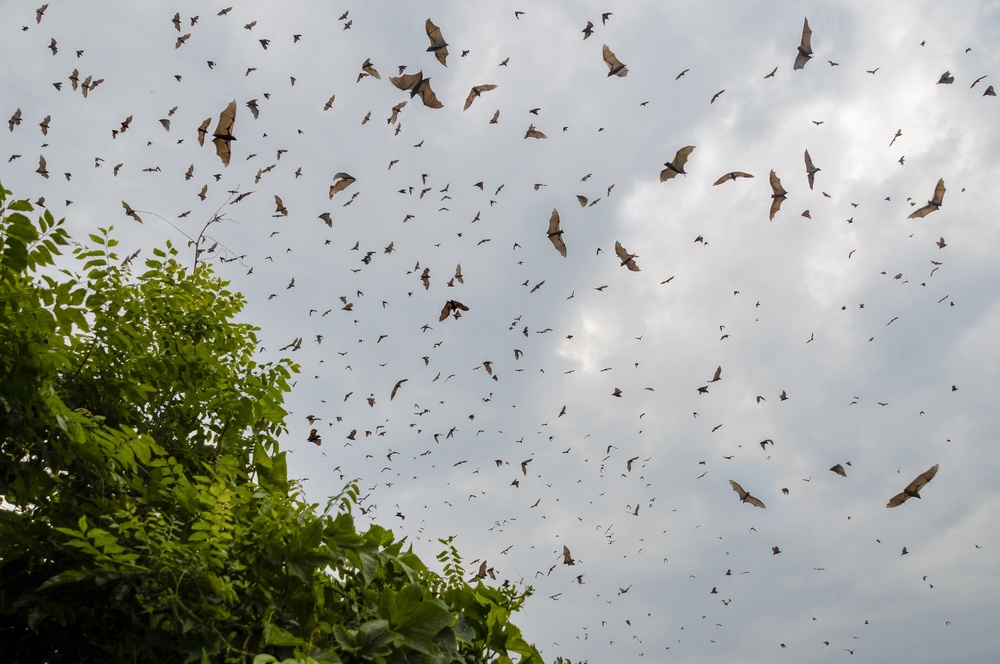
A Los Angeles Times columnist warned that nature would eventually fight back against humanity.
Rabid bats, bear attacks, and mosquito bites were her proof nature had already started.
The agency that actually tracks these animals tells a story she never put in print.
The Bat Numbers Climate Alarmists Will Not Mention
Los Angeles County had logged 69 rabid bats by late September 2026.
The county's public health department admits it does not know why the number climbed.
Fewer than 1 percent of healthy bats carry rabies in the first place, according to that same department.
In the last decade, exactly one person in the region has died from a bat-transmitted rabies case, in November 2024, per a CDC report.
Mary McNamara's column told readers the common denominator behind the bats, the mosquitoes, and the bear attacks was simple.
"Climate change," she wrote.
She went further, warning that "if we keep dumping toxins, nature will eventually fight back" and that nature will "correct the course on its own terms."
California Fish and Wildlife has a much less cinematic explanation on file.
The agency says the simple reason is that more people now live in bear and coyote country than ever before.
It also says an actual bear attack that injures someone is still a rare event.
More Bears and Hikers Mean More Encounters, Not a Hotter Planet
California's black bear population has sat somewhere between 49,000 and 71,000 for the last ten years.
That is a stable number, not a climate-fueled explosion.
Wildlife officials point to a much simpler driver of bear sightings near homes: unsecured garbage and food left out for the taking.
Mosquitoes tell the same story.
Standing water breeds mosquitoes, and heavy rain from Hurricane Marie plus a humid El Nino pattern pooled water across the state in 2026.
Despite the eco-horror framing, California logged 135 West Nile virus infections in 2026 – fewer than the totals from 2004, 2014, 2015, and 2017.
Meteorologist Anthony Watts, who writes for the Climate Realism project, points to the same overlooked variable in every one of these stories: more people living where wildlife already lived.
Deer have stopped fearing humans largely because hunting pressure on them has dropped, not because the thermostat moved.
Flooding gets the same treatment in McNamara's column, blamed on a warming planet.
The United Nations climate panel's assessment reports low confidence that human-caused warming is driving flood trends at all.
California's statewide precipitation has shown little long-term change, even as flood damage has climbed because more homes now sit in the way of the water.
California Already Explained This and the Los Angeles Times Ignored It
A newspaper that claims to follow the science skipped the one agency whose entire job is tracking this exact question.
California Fish and Wildlife already published the real answer: people built homes where the animals already lived.
That is not a thrilling pitch for a Hollywood-style eco-horror column, so it never made the piece.
Readers who live near these hills do not need a movie metaphor to understand what changed in their neighborhood.
They need to know that the deer in the yard and the bats in the attic showed up because the houses did, not because the weather got worse.
A slightly warmer world has brought real, well-documented benefits alongside its challenges, benefits that rarely make it into columns built around nature taking revenge.
The fix for rabid bats, hungry bears, and rising mosquito counts is wildlife management, secured trash cans, and reliable power and water infrastructure – not another lecture about carbon.
Readers who trust their own eyes over a newsroom's horror-movie pitch already knew that.
Sources:
- "Debunked: LA Times Eco-Horror Story Lacks Climate Evidence," RedState, October 13, 2026.
- "LA Times Turns California Wildlife Into a Climate Horror Story," Climate Change Dispatch, October 2026.
- Mary McNamara, "Killer Mosquitoes, Rabid Bats and Bear Attacks: Climate Change Is Making Eco-Horror Feel Real," Los Angeles Times, September 30, 2026.
- California Department of Fish and Wildlife, "Black Bear Population and Human-Wildlife Interaction Statement," California Department of Fish and Wildlife, 2026.
- Los Angeles County Department of Public Health, "Rabid Bat Surveillance Update," Los Angeles County Department of Public Health, 2026.
Related posts:

 Joe Scarborough Just Made the Same Mistake About Talarico That He Made About Biden
 Apple News Picked 620 Top Stories and the Conservative Total Fits On One Hand
 DHS General Counsel Opened Moussa Diawara’s File and Found the One Detail 60 Minutes Buried