Democrat Governor Josh Green bragged that settling the Lahaina fire lawsuits so quickly proved Hawaii is different.
Two years later, over a billion dollars meant for Lahaina survivors was still sitting in a trust account.
Then a Hawaii Supreme Court justice turned to the lawyers fighting for a bigger cut and stopped them cold.
Lawyers Fought Over Their Cut While Lahaina Waited
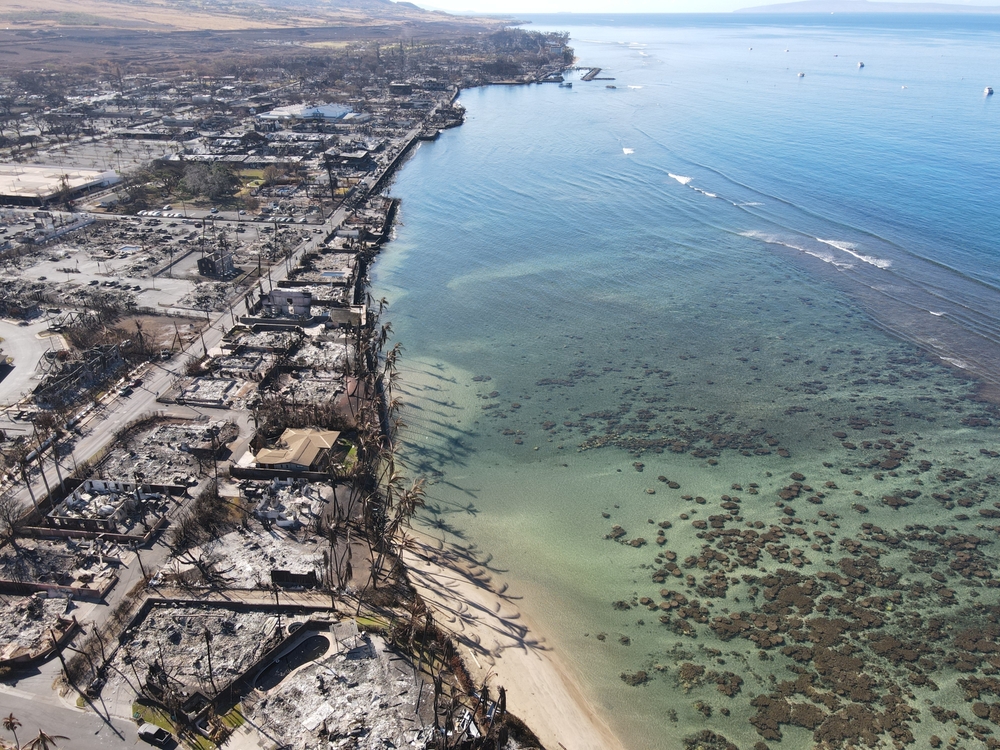
The fire tore through Lahaina on August 8, 2023, killing 102 people and destroying more than 2,000 structures.
Seven defendants – including the State of Hawaii, Maui County and Hawaiian Electric – agreed to a $4.037 billion global settlement in August 2024.
Green's own state government was one of the parties writing the checks.
Payments weren't expected until mid-2025.
That date came and went without a single settlement check reaching a survivor.
First came a court fight with insurance companies that wanted their share of the settlement.
Then came the lawyers.
Roughly 21,750 claimants are waiting on this money.
In June 2026, Second Circuit Judge Peter Cahill stepped in on the lawyers' fees.
Hawaii law normally lets attorneys take up to 25 percent of a settlement.
Cahill capped most fees between 3 and 10 percent, depending on when clients signed on.
That move alone kept roughly $800 million out of lawyers' pockets and in the hands of survivors.
He also set aside a separate $222 million "common benefit" fund for attorneys whose work helped every claimant.
Only Hawaii-based lawyers can collect from it.
Three attorneys – Anthony Ranken, Alex Edrenkin and John Thickstun – appealed, joined by one fire survivor, Michael Bates.
Their argument was simple: the judge had no power to rewrite private fee contracts.
While that appeal sat in front of the state's highest court, more than $1.1 billion sat in a trust account, waiting to go out the door.
Justice Sabrina McKenna Asked Whose Side the Fee Appeal Was Really On
At oral argument in September, attorney Samuel Shnider warned that the caps would hurt access to justice for Hawaii residents in the next disaster.
Associate Justice Sabrina McKenna wasn't having it.
She asked whether his clients were "complaining about the fact that they cannot pay any more in attorney's fees."
Strip away the access-to-justice talk and the appeal came down to a simple demand.
The lawyers wanted their contracts honored – contracts worth up to 25 percent – and survivors would have paid for it.
Bates was the only fire victim attached to the challenge out of more than 21,000 claimants.
No survivor in Lahaina was lining up to hand a lawyer more of the money meant to rebuild a home.
The court ruled unanimously against the challengers.
Justice Todd Eddins wrote that without authority over the fees, the court would be "powerless over the very proceeding it opened."
The justices did strike three provisions that punished lawyers for appealing their individual fee awards.
Everything else stood – the caps and the $222 million fund.
Eddins defended the fund with a kitchen-table metaphor about lawyers who did the heavy lifting for every claimant.
"There's a cost to baking the pie," he wrote.
The court's position is that those costs get spread across everyone who eats.
Liaison counsel Cynthia Wong expects claims administrators to start issuing payments within two months of the ruling.
Hawaii's Lawyers Still Walk Away With $222 Million on Top
Cahill and the justices deserve real credit for the caps.
But the $222 million fund survived intact.
Lawyers will draw that money down over the settlement's remaining three years.
A review board chaired by retired Hawaii Supreme Court Associate Justice James Duffy decides who gets paid from it.
Out-of-state lawyers who took Lahaina cases are stuck with the capped percentage and locked out of the fund entirely.
Hawaii-based firms get a second bite.
That matters because the pot was never big enough.
Lahaina survivors filed claims worth $12 billion to $15 billion against a $4 billion settlement.
Every dollar routed to an attorney is a dollar a burned-out family will never see.
California shows what a short pot does to fire victims.
The trust built for survivors of the 2018 Camp Fire and other PG&E blazes was paying only 70 cents on the dollar six years later, because the money simply ran short.
Lahaina's fund is short before the first check even goes out.
Lahaina buried 102 people.
The lawyers are about to get paid.
Green got his headline in 2024, and the survivors are still waiting on the mailman.
Sources:
- Jeremy Yurow, "Hawaii High Court Lets Lawyers Keep $222M From Maui Fire Settlement," Courthouse News Service, October 1, 2026.
- Michael Brestovansky, "State Supreme Court Ends Dispute Over Maui Fire Settlement Lawyer Fees," Aloha State Daily, October 3, 2026.
- Michael Brestovansky, "Maui Fire Settlement Back in Court Over Lawyers' Fees," Aloha State Daily, September 16, 2026.
- Andrew Gomes, "Court Upholds Maui Wildfire Attorney Fee Caps, Paving the Way for Settlement Payments," Honolulu Star-Advertiser, October 2, 2026.
- Andrew Wulfeck, "$4 Billion Settlement Announced Nearly a Year After Deadly Hawaii Wildfires," Fox Weather, August 3, 2024.
- Fire Victim Trust, "Fire Victim Trust to Increase Pro Rata Payments to California Wildfire Survivors to 70%," Fire Victim Trust, September 25, 2024.